
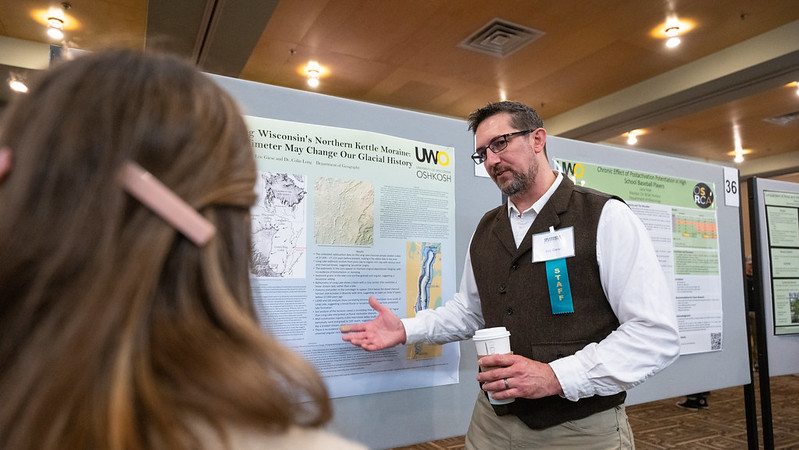
Two-day symposium showcases 100 UW Oshkosh students’ research
UWO’s Celebration of Scholarship and Creative Activity kicks off Wednesday in Reeve Memorial Union and continues Thursday, ending with a Provost’s Award Ceremony at 4 p.m.


Groundbreaking kicks off construction of new track at Titan Stadium
The University of Wisconsin Oshkosh Titan track and field teams are excited about the prospect of holding home outdoor track events on an all-new track, beginning with the 2025 outdoor season.
Construction of a new track began recently and is expected to be completed in August.
A ceremonial groundbreaking event took place April 24 at Titan Stadium, with Justin Kinseth, track and field head coach; Darryl Sims, athletic director; Abby Gildernick, assistant athletic director; Andrew Leavitt, chancellor; as well as track and field student athletes and Oshkosh Student Government leaders among those in attendance.
The Titans last held outdoor track meets in the 2014 season. UWO served as hosts of the Wisconsin Interscholastic Athletic Conference (WIAC) Championship and the National Collegiate Athletic Conference Qualifier in May of that year.
Check out the photo gallery from the groundbreaking:

Read more:

Admitted Students Day draws hundreds of future Titans to UW Oshkosh
Admitted Students Day at the University of Wisconsin Oshkosh provided a fun opportunity for future Titans to visit the campus many will call home this fall.
Around 400 people—prospective students, family members and guests—attended the event March 1.
“This event featured opportunities to explore residence halls, officially sign with UWO, tour impressive academic facilities and meet other new Titans at our student lounge area,” said Sean O’Melia, admissions event coordinator, who called it the “largest ever” admitted student day at UWO. “There was a distinct excitement and energy throughout the day, that many people are thrilled with their decision to become a UWO Titan next year.”
Check out the photo gallery from UWO Admitted Students Day!

Learn more:
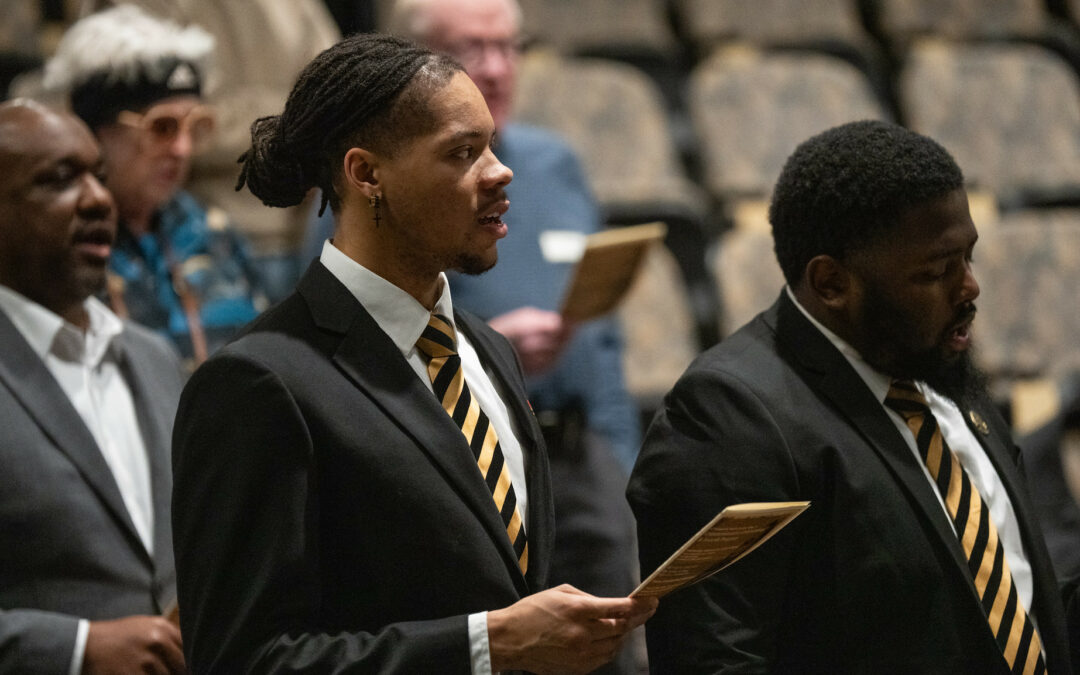
University, community gather for UW Oshkosh MLK Jr. celebration, awards
The University of Wisconsin Oshkosh this week, hosted its 4th Annual Dr. Martin Luther King Jr. Commemorative Celebration and awards program that includes the Oshkosh 94 scholarship program.
Held Feb. 28, the event took place at Reeve Memorial Union Theater and featured keynote speaker Corey A. King, the UW-Whitewater chancellor and member of Sigma Upsilon Lambda chapter of Alpha Phi Alpha Fraternity, Inc. It was part of a month-long programming schedule recognizing Black History Month.
Check out some photos from the MLK Jr. event:

African American Studies at UWO

Titans Day of Giving: Celebrate the black and gold while giving back
Sept. 12 is more than just the anniversary of the University of Wisconsin Oshkosh’s first day of classes in 1871—it’s also the third annual Titans Day of Giving.
Titans Day of Giving is a 24-hour robust virtual fundraising campaign to encourage alumni, patrons and friends to donate to an area of the University they are passionate about.
The goal is not only to raise funds to support a variety of academic programs and campus initiatives, but also to remind alumni and friends the impact that UW Oshkosh has had on their lives. By being a part of Titans Day of Giving, you have the chance to share your memories and stories of yesterday, as well as support the leaders, researchers and champions of tomorrow.
▶︎ Support Titans Day of Giving now
Learn more:
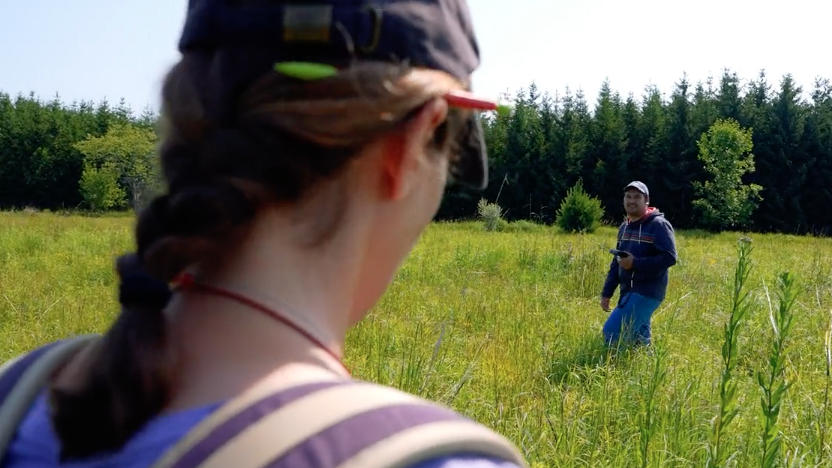
Environmental studies: Digging into soil at the AGM Nature Preserve

‘Go Mighty Titans’: UW Oshkosh Titans fight song
The Go Mighty Titans fight song that debuted in 2022 is by alumnus David Gillingham ’69 and MST ’77, an accomplished composer and retired music professor.
UW Oshkosh alumni Obituaries: April 2024
‘50s
Ruth (Thelke) Hart (EHS) ’52, Black River Falls, Feb. 10, 2024
Richard “Dick” Lanpheer (EHS) ’57, Palm Desert, California, Feb. 20, 2024
Joan Nelezen (EHS) ’51, (EHS) ’54, Minnetonka, Minnesota, Feb. 17, 2024
‘60s
Richard “Dick” DuMonthier (EHS) ’60, Sheboygan, March 6, 2024
Keith Folzman ’60 (LS), Brenham, Texas, Feb. 13, 2024
Judith Herrle (EHS) ’63, Kaukauna, Feb. 19, 2024
David Hilbelink (EHS) ’69, (MST) ’76, Appleton, Feb. 21, 2024
Leonard Manderfield (LS) ’61, Neenah, Feb. 1, 2024
Sandra (Tank) Martens (EHS) ’63, Egg Harbor, Feb. 18, 2024
William O’Brien (EHS) ’62, Appleton, March 13, 2024
Thomas Witthun (EHS) ’64, (MSE) ’75, Neenah, Feb. 27, 2024
‘70s
David Baumann (LS) ’76, Neenah, Feb. 15, 2024
James Benson (MSE) ’76, Florence, Arizona, Jan. 31, 2024
Robert “Bob” Christjohn (EHS) ’72, Grand Chute, March 9, 2024
Melvin Coonen ’74 (MBA), Pulaski, March 15, 2024
Gregory Hollub (EHS) ’71, Oconomowoc, Feb. 8, 2024
Colleen “CoCo” (Batley) O’Brien (EHS) ’71, (MA) ’79, Fox Crossing, Feb. 22, 2024
John “Steve” Okoniewski (MS) ’79, Green Bay, Feb. 25, 2024
Nancy Van ’76 (MSE), Wautoma, Feb. 16, 2024
Kenneth Whitford (EHS) ’70, Green Bay, Feb. 15, 2024
‘80s
David Mairet, Jr. (EHS) ’84 and (LS) ’84, Madison, March 10, 2024
Brenda Sue (Ziegelbauer) Quick ‘86 (N), Mequon, March 3, 2024
‘90s
Gregory Walther (LS) ’96, Neenah, Feb. 13, 2024
‘10s
Rebekah Braun (MPA) ’18, Plymouth, Feb. 19, 2024
Faculty and Friends
Betsy Omness, 2004-2023 food service specialist, Oshkosh, Feb. 20, 2024
UW Oshkosh alumni Class Notes: April 2024
’70 Ken Loest (LS) and ’78 (MS) of Plymouth, is retiring from teaching math after 51 years. Loest will speak at graduation this year as his final swan song at Glenbeulah High School. Loest and his wife ’71 Carol (Guse) Loest (EHS) plan to travel in their retirement.
’84 George Kroeninger (EHS) of Madison, was named Milwaukee School of Engineering’s (MSOE) inaugural executive director of professional education. Along with his new role, he will be launching the Center for Professional Education. Kroeninger’s vision includes supporting MSOE alumni and other professionals by providing access to continuing education.
’85 Erin Murphy (N) of Saint Paul, Minnesota, took over as Senate majority leader in Minnesota. Murphy served for 12 years in the Minnesota House as well as ran for governor in 2018. She also chairs the Rules and Administration Committee and serves on the Higher Education and Finance committees.
’95 Maurice Wince (EHS) of Milwaukee, and his wife Yashica Spears, were awarded a $25,000 grant by the Federal Home Loan Bank of Chicago’s Accelerate Grant for their grocery store Sherman Park Grocery. Wince and Yashica opened Sherman Park Grocery in 2022 in hopes of addressing Milwaukee’s food desert problems. This grant will allow them to further invest in their community’s well-being.
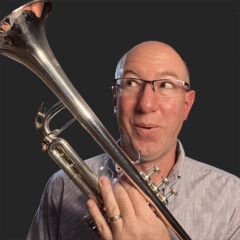
Tom Swigert
’97 Tom Swigert (LS) of Hartford, joined the seven-piece horn rock band Part Time Models as the lead trumpet. While in school at UWO, Swigert studied trumpet under Al Butcher, jazz under John Harmon and music recording under Wally Messner. Part Time Models performs in the Milwaukee area.
’98 Stephen Powers (LS) of Thomaston, Georgia, published his fourth poetry collection, Hail my Attention Kindly. The collection is a mix of lyric and narrative poetry about a tour through India, Ireland, Jekyll Island, New York City, London, Berlin, Hawaii, the Northwoods of Wisconsin and the world of Dolly Parton. 
’91 John Schroeder (LS) of Waukesha, is the chairman of the planning committee for the 49th annual Convention of the Military Vehicle Preservation Association (MVPA). The event will be held at the EAA grounds in Oshkosh in September.
’01 William Krautkramer (EHS) of Kaukauna, has been hired as the head coach of the Kaukauna girls soccer team. Krautkramer has 22 years of teaching experience and was named the 2023 teacher of the year for Neenah Joint School District. He also comes to the head coach position with over 30 years of playing and coaching experience in the Fox Valley area.
’02 Melissa Johnston (LS) of Berlin, is completing her 21st year at Berlin High School as the licensed athletic trainer. She lives with her two Yorkies Isabelle and Teddy.
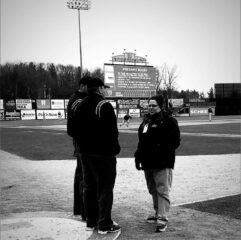
Melissa Johnston
’06 Timothy Ziegler (LS) of New York, New York, was the editor on multiple highly regarded docuseries including Madoff: The Monster of Wall Street on Netflix, FDR on the History Channel, and Conversations with a Killer: The Jeffery Dahmer Tales on Netflix.
’07 Kevin Chevalier (LS) of Greenville, has been named an associate of the company at McMahon. Chevalier is an architecture, engineering, and construction professional with more than 25 years of experience.
’07 Jeff Potts (LS) and ’16 (MBA) of Wytheville, Virginia, was hired as the first managing director for GableStage Theatre. He will manage the company’s administrative functions and oversee day-to-day operations at the theatre.
’09 Jessica Johnson (MS) of Ripon, was selected by members of the school board, administration, parents, students, teachers and staff to be the principal of the Murray Park Quest Elementary School. Johnson comes with 20 years of experience in education.
’12 Tanya Reynen (LS) of Oconomowoc, was appointed as the City of Watertown fire chief. Reynen served as deputy chief of training center at Lake County Fire Rescue and as an adjunct fire/EMS instructor at Waukesha County Technical College. She also served as a firefighter/paramedic in Watertown and the Town of Brookfield.
’12 Rebecca (Dyreson) O’Connell (N) of Stevens Point, has been working as a bedside nurse at Marshfield Medical Center in the surgical ICU since graduation. Taking inspiration from one of her professors, she is completing her master’s degree this spring. She is married to ’12 Jason O’Connell (B).
’15 Daniel Zamost (MSE) of Appleton, will become the principal of Ripon Middle School July 1. He was the unanimous choice of a 17-member selection team.
’15 Ryan Steiskal (LS) of Neshkoro, has a gallery opening in the Annex Gallery on the UWO campus April 4-18. Steiskal is an illustrator, painter and draftsmen that uses acrylic inks to create images of animals and sci-fi or supernatural elements.
’19 Samuel Pedersen (EHS) of Muskego, was hired as Stewartville’s volleyball coach. Pedersen comes with a host of assistant coaching experience at the high school level, one year of head coaching experience and two years of assistant coaching experience at the collegiate level.
’21 Alixandria Talady (EHS) of Milwaukee, is a third-year fourth grade teacher at the Sharon Community School. Talady was the featured Service Above Self Award honoree this past February for her service to her students and the school’s community.
’22 Reagan Fritts (LS) of Oswego, Illinois is the social media coordinator at Red Shoes Inc. Fritts started as an account assistant and has been with the company since 2023.
Building cultural awareness and communication with Mariachi music
WisMAP is a culturally enriching opportunity for academics, artists and the community to connect through appreciation and performance of Mariachi music.
Organized by the Chicana/o and Latinx Studies program at UW Oshkosh, a series of events is planned this month and in April—including several on the UW Oshkosh campus.
- The University of Texas Mariachi Ensemble and its director, Jose Torres, will perform at 5 p.m. March 14 in the UWO Concert Hall, where an interpretive discussion will follow on building community through music.
- An April 1 event will showcase the cultural influences of Mariachi culture beyond the music. Francisco Hernandez, a classically trained musician, has more than 10 years of experience playing in Mariachi ensembles in Milwaukee and is music director for Mariachi Monarcas de Milwaukee. He will speak with students and the public from 1:50-2:50 p.m. (campus location TBA), about his experience growing up in an emerging Mariachi culture in Wisconsin.
- Siduri Christiansen of the University of Texas San Antonio, will discuss the role of Mariachi music in language instruction, from 1:50-2:50 p.m. April 22, on a campus location TBA.
UW Oshkosh Obituaries: March 2024
‘50s
Marilee (Reinert) Murphy (EHS) ’56, Marion, Indiana, Jan. 25, 2024
Sharon (Halverson) Sanborn (EHS) ’53 and (EHS) ’79, Eagle River, Feb. 7, 2024
‘60s
Michael Dodge (LS) ’62, White Lake, Jan. 6, 2024
Rev. Ned Dorau (LS) ’69, Random Lake, Jan. 23, 2024
Karen Scharf (LS) ’65, Brillion, Jan. 20, 2024
‘70s
Mary Mathe (EHS) ’76 and (MS) ’89, Oshkosh, Jan. 26, 2024
Kathryn “Kathy” (Becker) McDermott (B) ’71, Fountain Hills, Arizona, Jan. 17, 2024
Marie (Buchholz) Pappas (LS) ’71, Tucson, Arizona, Feb. 2, 2024
John Vukos (LS) ’72, Neenah, Jan. 24, 2024
‘80s
Revana “Vannie” Mader (N) ’88, Appleton, Jan. 25, 2024
Lisa (Glandt) Prellwitz (EHS) ’85, Kaukauna, Jan. 29, 2024
Ruth Schrank (N) ’82, Waupun, Feb. 10, 2024
‘90s
Sajid “Saj” Baldwin (LS) ’98, Neenah, Jan. 18, 2024
‘10s
Sara Vanderlin (MBA) ’14, Fond du Lac, Jan. 19, 2024
Faculty and Friends
Harvey Jacobson, Journalism Professor Emeritus 1984-1993, Oshkosh, Dec. 8, 2023
Roberta Stuemke, Polk Library 1976-2011, Oshkosh, Feb. 3, 2024
UW Oshkosh alumni Class Notes: March 2024
’77 Denise (Desens) Gosar (LS), of Eugene, Oregon, and her husband Frank Gosar are displaying their exhibit called “Desk and Table” at the Viterbo University Gallery. They also own a studio together called Off-Center Ceramics.
’75 Sue Haldemann (LS), of Menasha, retired from the Medical College of Wisconsin after 23 years as the coordinator for student support services. She has moved back to the Fox Valley and in 2022, participated in her church’s Good Neighbor Team and welcomed a family of 10 from the Congo.
’89 John Ceelen (B) and (LS), of Mequon, has become Bellin Health and Gunderson Health System’s new chief financial officer. Ceelen most recently served as CFO of Banner Health’s Western Division and has more than 30 years of experience in healthcare finance leadership.
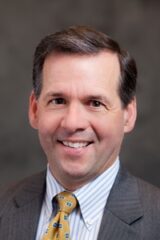
John Celeen
’93 Shannon Burns (B), of Whitefish Bay, has been appointed as interim principal financial officer at Enerpac Tool Group. Burns joined Enerpac in Nov. 2022 and prior to that, held a position in financial leadership at Harley-Davidson, Inc. Burns is married to ’94 Jennifer (Harlfinger) Burns (LS).
’93 Donna Van Dyke (B), of Neenah, was promoted to vice president and treasurer for The Boldt Co. Van Dyke started at Boldt in 2020 and brings 30 years of experience in accounting and treasury background.
’95 Jennifer (Herbert) Walters (LS), of Fond du Lac, is celebrating 25 years at Aurora Health Care as the vice president of business development. She’s also started a personal training business called JW Fitness.
’96 Tammy Brunette (EHS) and ’06 (MSE), of Green Bay, was named the coordinator of the Learning and Innovation Center in Sister Bay by Northeast Wisconsin Technical College.
’97 Kim Svoboda (LS), of Cape Coral, Florida, is joining the national office of the YMCA of the USA as the senior director of philanthropy and partnerships.
’98 Laurie Butz (MBA), of Suamico, has joined the New North Inc. board of directors. She also serves as the president and CEO of Capital Credit Union and has been in that position since Nov. 2021.
’01 Jennifer (Covey) Gennerman (EHS), of Sussex, will become the deputy superintendent of teaching and learning for the school district of Waukesha this summer.
’05 Joshua Kohlman (LS), of Evansville, was sworn in as an officer in the Beloit Police Department. He brings 16 years of law enforcement experience and served in the US Army Reserves.
’11 Sean Lynch (LS), of Oshkosh, graduated with a degree in vocal performance and has since performed at the 2022 TEDxOshkosh. He will be singing at the Oshkosh Symphony Orchestra’s April 20 concert. Lynch also owns and operates Winnebago Bicycle in downtown Oshkosh.
’12 Airen Pfeiffer (EHS), of Madison, spent 10 years teaching social studies in Bangkok Thailand. Recently, he and his wife moved back to Wisconsin, and he is now teaching high school history at Wisconsin Heights High School.
’13 Phillip Rotar (LS), of Kansas City, Missouri, was commissioned from active duty in 2013 after serving in various leadership roles around the world. He is now a student at the Command and General Staff College working towards his master’s degree.
’20 Jake Fleischman (LS), of Gleason, has been sworn into the UW-La Crosse Police Department after attending the Police Academy at WTC where he was sponsored by UPD.
’20 Niklas Romskog (LS), of Espanola, New Mexico, became an engine boss for the
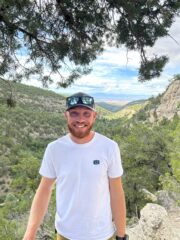
Niklas Romskog
Silver City Ranger District on the Gila National Forest in New Mexico after graduation. As the next step in his career, he took the position of all-hazard emergency planning for the New Mexico Department of Health.
’21 Miranda Rehm (LS), of Waukesha, attended graduate school at UW-Madison and received a master’s in social work in 2023. She is now working as an advance practice social worker at Mendota Mental Health Institute.
Stories by Category
By Topic:
Alumni
Athletics
Campus Life
Research
Sustainability
Titan Impact
By Area of Study:
Fine and Performing Arts
Business
Education and Human Services
Nursing
Humanities
Math and Natural Science
Social Science
Be a part of the UW Oshkosh story: JOIN OUR MAILING LIST SUBMIT A STORY VIEW EVENTS FOR THE MEDIA
UW Oshkosh begins revitalizing Titan Field’s outdoor track
WLUK, April 24
Remembering Ukrainian students lost to war
The Advance-Titan, April 24
UWO expert on Russian politics offers update on Russia-Ukraine war
WFDL’s Between the Lines, April 24
UWO alumna Tanya Reynen sworn in as Watertown fire chief
Daily Dodge, April 24
UW Oshkosh academic remodel looks to increase efficiency and save money
WLUK, April 22